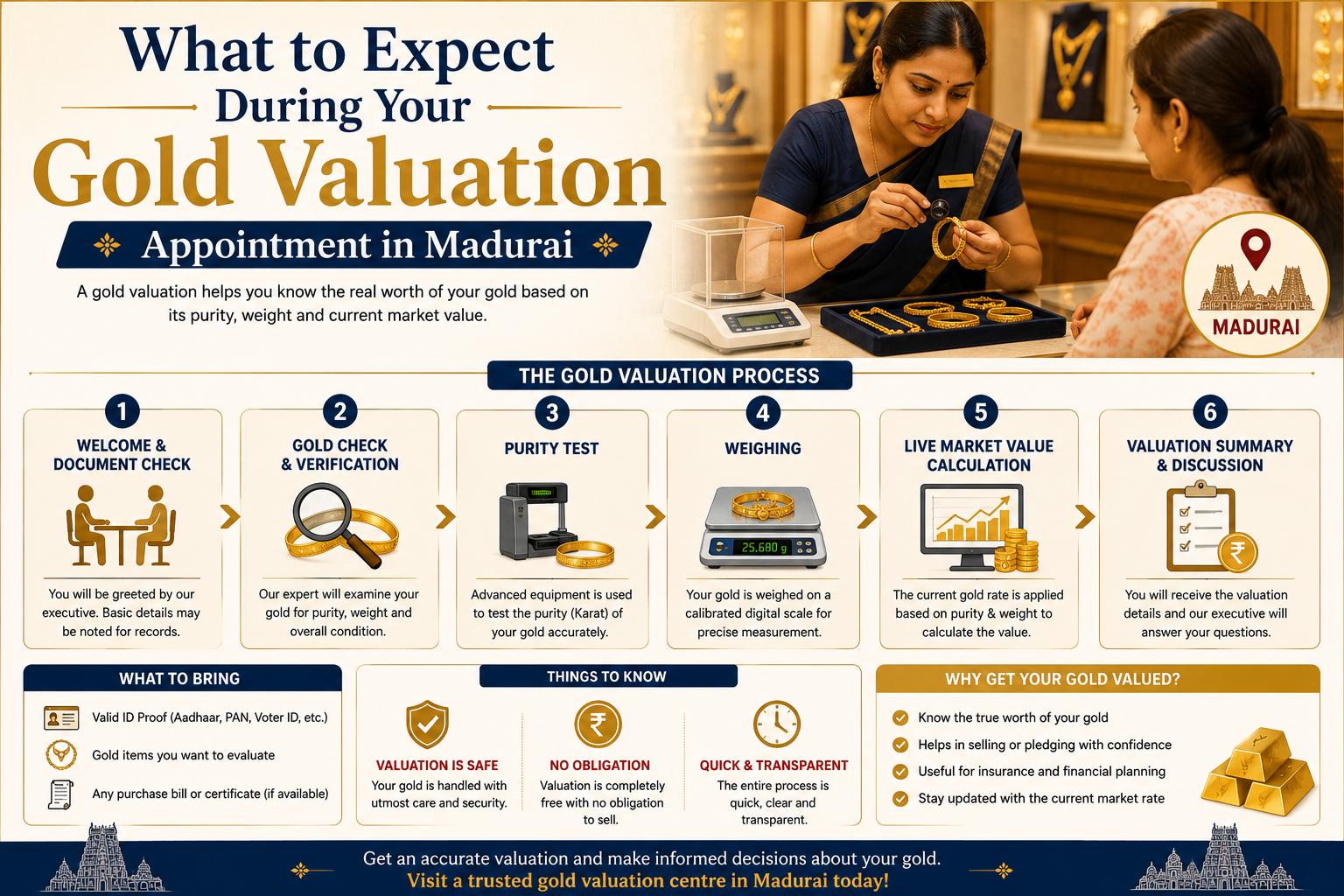
Step One: Visual Inspection
A gold buyer in Madurai begins by visually examining all pieces. They look for obvious signs of the metal type — colour, wear patterns, visible hallmarks — and identify any attached non-gold components such as strings, rubber bands, plastic clasps, or gemstone settings. Pieces with extensive stone setting will have the stone weight deducted from the total before pricing.
This inspection is your opportunity to observe and ask questions. If you know the purity from an original invoice or the hallmark, mention it. Providing context helps speed up the assessment and gives the buyer a starting reference point for XRF testing.
Step Two: XRF Purity Testing
After inspection, each piece is placed on the XRF machine. The test takes 30–60 seconds and produces a printout or screen display showing the percentage of gold, silver, copper, and other metals. You are entitled to watch the screen and read the result yourself.
The XRF result establishes the fineness of your gold. For hallmarked pieces, this should closely match the stamped fineness (e.g., 916 for 22-karat). For older or unhallmarked pieces — including Madurai's traditional temple jewellery and antique bridal sets — the XRF reading is the definitive purity figure used for pricing.
Your right as a seller: If the XRF result shows a purity significantly different from what the hallmark states, ask for an explanation or request a repeat test. A discrepancy of more than 10 fineness points between a certified BIS hallmark and the XRF result warrants scrutiny.
Step Three: Weighing and Deductions
After purity testing, each piece is weighed on a Legal Metrology-certified digital scale. For stone-set jewellery, the buyer will either remove the stones or estimate the stone weight and deduct it from the gross weight to arrive at the net gold-bearing weight. Ask to see the scale reading and the deduction figure before you accept them.
Typical stone deductions range from 0.5 grams for a small solitaire setting to several grams for heavily studded pieces. If you disagree with the estimated deduction, ask the buyer to remove the stones and weigh them separately, or weigh the piece before and after stone removal.
Step Four: Offer Calculation and Acceptance
With the purity and net weight established, the buyer calculates the offer: (net weight in grams) × (purity as a decimal) × (today's IBJA rate for 999 gold) × (1 minus buyer's margin). A transparent buyer will walk you through this calculation. The final number should be within 2–5% of the raw melt value.
You are not obligated to accept the offer. If it seems lower than expected, ask the buyer to confirm each variable in the calculation — rate, purity, weight, margin. If you are not satisfied, decline and seek a second opinion from another gold buyer in Madurai before making a final decision.
Tags