Visual Inspection and Preliminary Assessment
The first stage of any gold valuation is a visual inspection. The buyer examines each piece for the BIS hallmark, maker's marks, and any obvious indicators of purity or composition. They note which pieces have stones, which appear to be hollow, and whether any are likely gold-plated rather than solid gold. This preliminary step guides the testing strategy for each piece.
You should be present during this inspection. Point out any hallmarks you have noticed, share the original purchase invoice if you have it, and mention the approximate age of each piece if you know it. This context helps the buyer make a more accurate initial assessment and reduces the chance of incorrect assumptions about old or unusual pieces.
XRF Purity Testing
After visual inspection, each piece is placed on the XRF machine. For bangles and rings, the machine reads through the surface of the metal. For chains, a representative link is held against the XRF sensor. The machine displays a full elemental analysis within 60 seconds — gold percentage, silver percentage, copper percentage, and any other metals present.
Watch this step carefully. Ask the operator to confirm the gold fineness shown on screen for each piece. Compare the XRF result against the hallmark stamped on the jewellery. If the two are within 5–10 fineness points of each other, they are consistent. A significant discrepancy (more than 20 points) should prompt a question or request for a re-test.
Your right during valuation: You may reject an offer at any stage before signing the transaction receipt. You are under no obligation to sell once you have had your gold tested — testing is non-destructive and the buyer does not charge for it. Use this opportunity to collect an offer and compare it with competitors.
Stone Removal and Weight Deduction
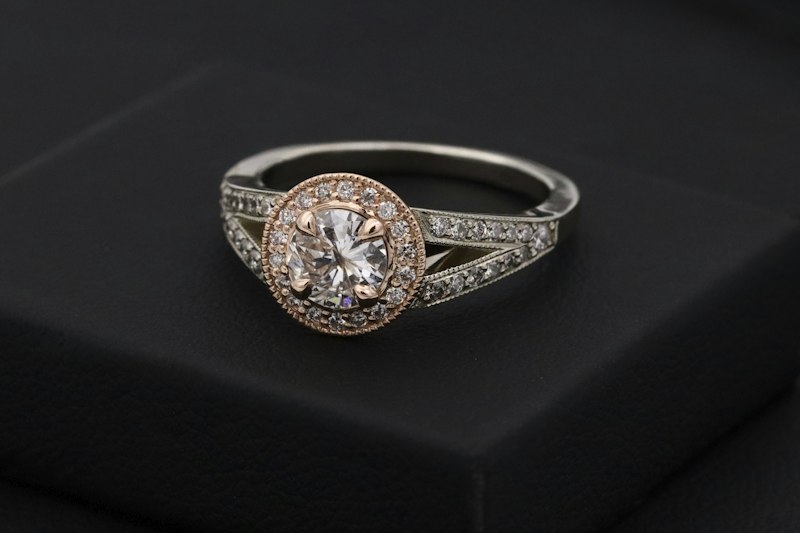
For stone-set jewellery, the buyer must deduct the weight of non-gold components before calculating the gold price. How this is handled depends on the buyer. The cleanest method is to physically remove stones from their settings, weigh the stones separately, and subtract that weight from the total. Some buyers use estimation tables based on stone size and type.
Ask to see the stone weight that is being deducted. For a ring with small diamonds, a deduction of 0.2–0.4 grams is typical. For a large ruby or sapphire, it may be 1–2 grams. Unreasonably high stone deductions without physical removal or visible measurement are a red flag.
How the Final Offer Is Calculated
The final offer calculation is straightforward once the inputs are established: Offer = net gold weight (grams) × purity (as decimal) × IBJA rate (per gram) × (1 − buyer margin). For example: 15 grams net weight, 916 purity, IBJA rate ₹7,200/gram, 3% margin = 15 × 0.916 × 7,200 × 0.97 = ₹96,008.
A transparent buyer will show you this formula or write it on the receipt. Some buyers provide a digital or printed breakdown. Before accepting, verify each component: is the net weight what was shown on the scale? Is the purity what the XRF displayed? Is the IBJA rate today's published figure? If all three check out, the offer is mathematically fair.
Tags